
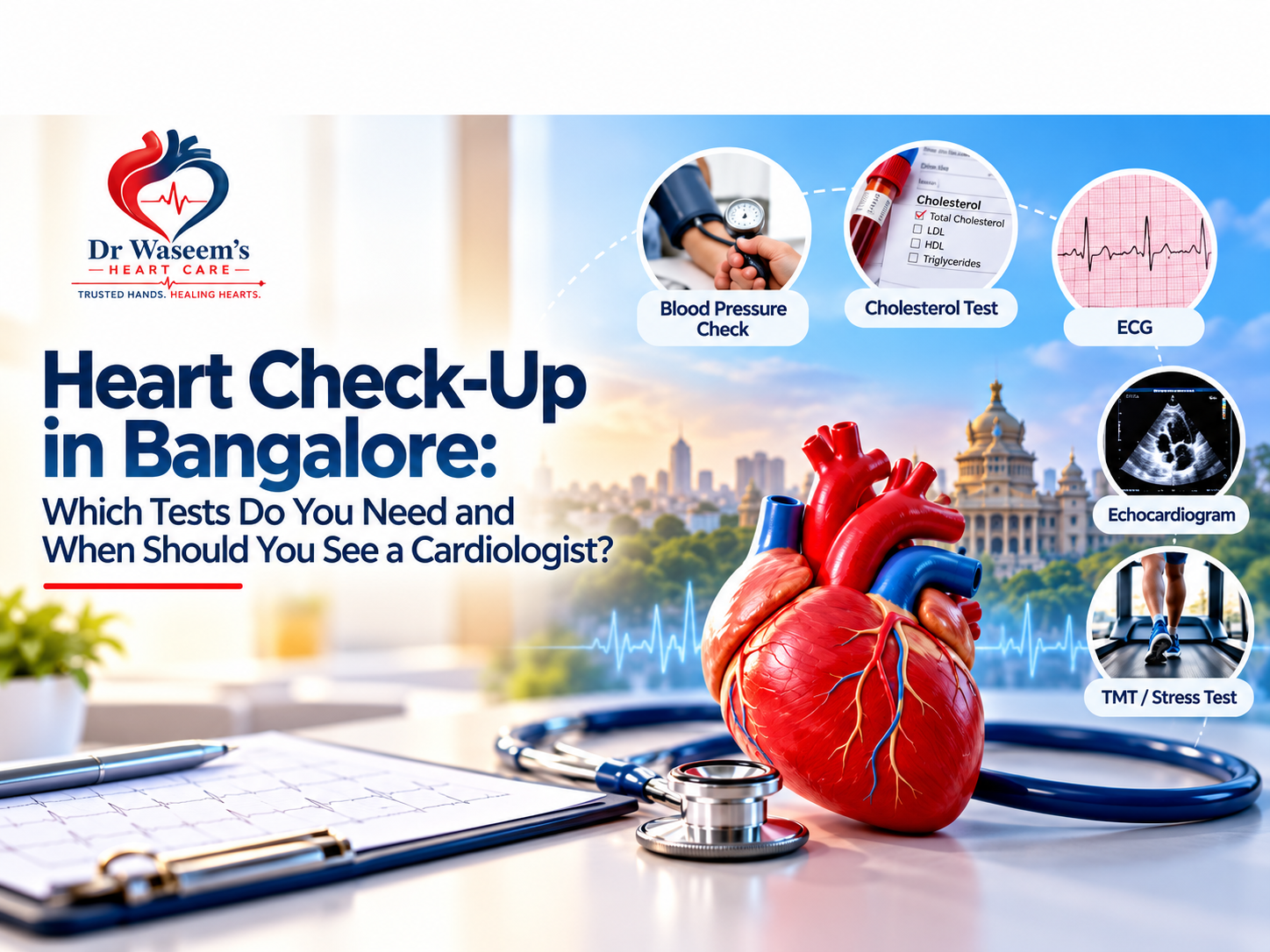
Heart Check-Up in Bangalore: Which Tests Do You Need and When Should You See a Cardiologist?
A regular heart check-up in Bangalore can help identify cardiovascular risk factors before they become serious problems. High blood pressure, high cholesterol, diabetes, smoking and family history can all increase your risk of heart disease.
But which heart screening tests do you actually need? And when should you consult a cardiologist in Bangalore? This guide explains the common cardiac tests, who may need them and when professional evaluation is important.
What Is a Heart Check-Up?
A heart check-up is a medical evaluation designed to assess your cardiovascular health and identify possible risk factors for heart disease.
Depending on your age, symptoms, family history and existing medical conditions, your doctor may recommend different investigations. A routine cardiac health check-up may include blood pressure measurement, blood tests and an ECG, while additional tests may be recommended when clinically necessary.
Why Is Heart Screening Important?
Some cardiovascular risk factors can develop without obvious symptoms. High blood pressure and high cholesterol, for example, may remain unnoticed for a long time.
Regular and appropriate screening can help identify these risks and allow your doctor to recommend lifestyle changes, monitoring or treatment when required.
According to the World Health Organization , cardiovascular diseases are among the leading causes of death worldwide.
Who Should Consider a Heart Screening?
Not everyone needs the same type of heart screening. Your doctor considers your age, symptoms, medical history and cardiovascular risk factors before recommending tests.
A cardiac evaluation may be particularly important if you have:
- High blood pressure
- High cholesterol
- Diabetes
- Smoking history
- Overweight or obesity
- A family history of heart disease
- Previous heart disease
- Chest discomfort
- Unexplained breathlessness
- Palpitations or irregular heartbeat
- Reduced exercise tolerance
Which Heart Screening Tests May Be Recommended?
1. Blood Pressure Check
Blood pressure measurement is one of the simplest parts of a heart check-up. Persistently high blood pressure can increase the risk of cardiovascular disease and other complications.
2. Lipid Profile Test
A lipid profile measures blood fats such as total cholesterol, LDL cholesterol, HDL cholesterol and triglycerides.
Your doctor can use these results along with your other risk factors to assess your cardiovascular risk.
Read more: Cholesterol Explained: Good, Bad & What It Means for Your Heart
3. Electrocardiogram (ECG)
An ECG records the electrical activity of your heart. It can help doctors identify certain rhythm abnormalities and other cardiac changes.
An ECG may be recommended if you have symptoms such as palpitations, dizziness, chest discomfort or unexplained shortness of breath.
4. Echocardiogram
An echocardiogram uses ultrasound to create images of the heart. It can help evaluate the heart’s chambers, valves, structure and pumping function.
Your cardiologist may recommend an echocardiogram when your symptoms or other test results require further evaluation.
5. Treadmill Test (TMT)
A treadmill test evaluates how your heart responds to physical activity. Depending on your symptoms and clinical risk, a doctor may recommend an exercise stress test as part of the evaluation.
6. Coronary CT Angiography or Other Imaging
In selected patients, advanced imaging may be used to evaluate the coronary arteries. The appropriate test depends on your symptoms and clinical situation.
When significant coronary artery disease is suspected, your cardiologist may recommend further evaluation such as coronary angiography.
Learn more: Coronary Angiography in Bangalore
When Should You See a Cardiologist?
You should consider consulting a cardiologist in Bangalore if you have symptoms, multiple cardiovascular risk factors or abnormal results from previous tests.
Common Reasons to Consult a Cardiologist
- Persistent or unexplained chest discomfort
- Shortness of breath
- Palpitations or irregular heartbeat
- Repeated dizziness or fainting
- High blood pressure
- High cholesterol
- Diabetes with cardiovascular risk
- Strong family history of heart disease
- Abnormal ECG or other cardiac test results
You can also read: Choosing the Best Cardiologist in Bangalore
When Is a Heart Check-Up Urgent?
Some symptoms require immediate medical attention rather than waiting for a routine cardiac health check-up.
- Sudden or severe chest pain or pressure
- Severe difficulty breathing
- Cold sweating with chest discomfort
- Fainting or loss of consciousness
- Pain spreading to the arm, shoulder, back, neck or jaw
If these symptoms occur, seek emergency medical care immediately.
Read more about warning signs: Heart Attack Warning Signs You Should Never Ignore
Where Can You Get a Heart Check-Up in Bangalore?
If you are searching for a heart screening in Bangalore, choosing a qualified cardiologist is important. The appropriate tests should be selected according to your symptoms, medical history and cardiovascular risk.
Dr. Waseem Nadaf provides cardiac consultations and advanced heart care in Bangalore, including evaluation of cardiovascular risk factors, diagnostic testing and treatment planning.
Learn more about Dr. Waseem Nadaf: Doctor Profile
Why Choose an Experienced Heart Specialist?
A heart screening should not simply mean completing as many tests as possible. The right tests should be selected according to your individual health needs.
An experienced heart specialist in Bangalore can evaluate your symptoms, medical history and test results and determine which investigations may be appropriate.
Frequently Asked Questions
How often should I have a heart check-up?
The frequency depends on your age, health conditions, cardiovascular risk factors and family history. Your doctor can recommend an appropriate screening schedule for you.
What tests are included in a heart check-up?
Depending on your individual situation, a heart check-up may include blood pressure measurement, blood tests, ECG and other investigations such as an echocardiogram or stress test when clinically indicated.
Can I have heart disease without symptoms?
Yes. Some cardiovascular risk factors and conditions may not cause obvious symptoms. Appropriate evaluation can be important for people with significant risk factors.
Which doctor should I consult for heart problems?
A cardiologist is a specialist who evaluates and treats diseases and conditions affecting the heart and cardiovascular system.
Is a heart screening necessary for young adults?
Not everyone needs extensive cardiac testing. However, young adults with symptoms, significant risk factors or a strong family history should discuss their cardiovascular health with a qualified doctor.
Take the First Step Towards Better Heart Health
If you are looking for a heart check-up in Bangalore or want to discuss your heart health and cardiovascular risk factors, consult a qualified cardiologist.
Dr. Waseem Nadaf provides cardiac consultations and heart care in Bangalore with a focus on accurate diagnosis, preventive care and personalized treatment.
Phone: +91 91087 81238
Location: Parkside Medical Centre, HBR Layout, Bengaluru
Book an Appointment