
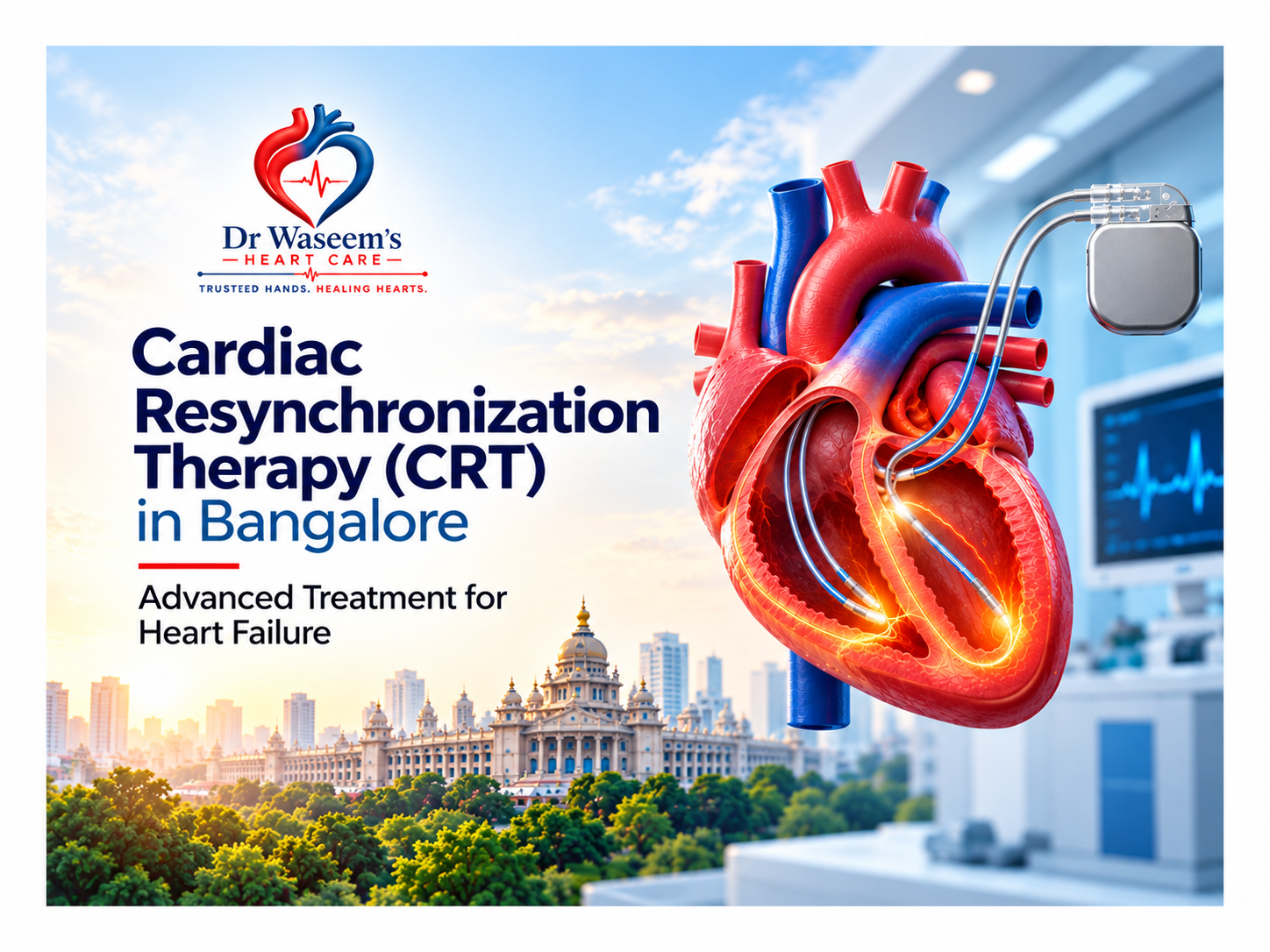
Cardiac Resynchronization Therapy (CRT) in Bangalore: Advanced Treatment for Heart Failure
For patients living with congestive heart failure, severe fatigue and breathlessness can make even simple daily tasks exhausting. When medication alone is no longer enough to support a weakened heart, undergoing cardiac resynchronization therapy Bangalore offers a life-changing, advanced solution. Also known as biventricular pacing, this specialized device therapy restores the natural, synchronized pumping rhythm between the heart’s lower chambers, significantly improving cardiac output and quality of life.
Navigating advanced heart failure treatment Bangalore requires clarity, precision, and confidence in your care plan. Understanding how a CRT pacemaker Bangalore works, exploring the critical differences in CRT-D vs CRT-P, and knowing what to expect during the biventricular pacemaker procedure can help patients and their families make informed, proactive decisions about their cardiovascular care.
What is Cardiac Resynchronization Therapy (CRT)?
In a healthy heart, the left and right ventricles (the lower pumping chambers) contract simultaneously to pump oxygen-rich blood efficiently throughout the body. In many heart failure patients, damage to the electrical conduction system (often called Left Bundle Branch Block or LBBB) causes the ventricles to beat out of sync. This uncoordinated contraction causes the heart to work much harder while pumping less blood.
Cardiac resynchronization therapy (CRT) utilizes an advanced, implantable battery-powered device that sends precisely timed electrical impulses to both ventricles simultaneously. By resynchronizing the chambers, CRT allows the heart muscle to pump more efficiently, improves ejection fraction (EF), and relieves debilitating symptoms such as persistent breathlessness and swelling in the legs.
Who is an Ideal Candidate for CRT in Bangalore?
Not every heart failure patient requires a CRT device. An interventional cardiologist performs comprehensive diagnostic testing—including an echocardiogram and an ECG—to confirm eligibility. You may be recommended for cardiac resynchronization therapy Bangalore if you meet the following clinical criteria:
- Moderate to Severe Heart Failure: NYHA Class II, III, or ambulatory Class IV heart failure symptoms despite optimal medical therapy.
- Reduced Ejection Fraction: An echocardiogram showing an Ejection Fraction (EF) of 35% or lower.
- Electrical Dyssynchrony (Wide QRS Complex): An ECG indicating delayed electrical conduction (QRS duration ≥ 130–150 ms, typically Left Bundle Branch Block).
- Persistent Symptoms: Continuing to experience shortness of breath and fluid retention despite regular heart failure medications.
CRT-D vs CRT-P: Which Device Do You Need?
When discussing a CRT pacemaker Bangalore, your cardiologist will evaluate whether you need a CRT-P (Pacemaker) or a CRT-D (Defibrillator). Both devices resynchronize the heart ventricles, but they offer distinct protective capabilities:
| Feature | CRT-P (Pacemaker) | CRT-D (Defibrillator) |
|---|---|---|
| Primary Function | Biventricular pacing to synchronize ventricular contraction. | Biventricular pacing PLUS life-saving defibrillation for sudden cardiac arrest. |
| Arrhythmia Protection | Paces the heart; does not deliver high-energy shocks. | Instantly detects and shocks dangerous ventricular tachycardia/fibrillation. |
| Ideal Candidates | Patients needing rhythm synchronization without high arrhythmia risk. | Heart failure patients at elevated risk of sudden cardiac arrest (low EF). |
| Battery Lifespan | Typically 7 to 10 years. | Typically 5 to 8 years (due to shock capacitor readiness). |
For individuals at risk of malignant arrhythmias, choosing a CRT-D provides essential double-layer protection by combining chamber resynchronization with 24/7 defibrillator readiness.
Step-by-Step: The Biventricular Pacemaker Procedure
The biventricular pacemaker procedure is a minimally invasive catheterization technique performed in a sterile Cardiac Catheterization Laboratory. Here is what happens during the procedure:
1. Preparation & Local Anesthesia
The patient receives a mild sedative for relaxation, followed by local anesthesia injected below the left collarbone to numb the surgical area completely. The patient remains comfortably awake throughout the implantation.
2. Placement of the Three Pacing Leads
Unlike traditional pacemakers that use one or two leads, a CRT device uses three thin insulated leads guided through the veins under real-time X-ray (fluoroscopy):
- Lead 1: Placed in the Right Atrium.
- Lead 2: Placed in the Right Ventricle.
- Lead 3: Navigated through the coronary sinus vein to the outer wall of the Left Ventricle.
3. Generator Connection & Pocket Creation
The leads are connected to the small CRT generator, which is nestled into a small subcutaneous pocket beneath the skin below the collarbone. The doctor tests the electrical signals, programs the device, and closes the incision with dissolvable sutures.
CRT Implantation Recovery and Expected Benefits
Following your cardiac resynchronization therapy Bangalore procedure, hospital recovery is smooth and closely monitored:
- Hospital Stay: Patients typically remain in the hospital for 1 to 2 days for post-op monitoring, device calibration, and a confirmation chest X-ray.
- First 4 to 6 Weeks: Avoid lifting heavy objects (over 5 kg) or raising your left arm above shoulder level to allow the leads to securely anchor into cardiac tissue.
- Ejection Fraction Improvement: Over the following months, up to 70% of CRT recipients experience significant “reverse remodeling”—where the enlarged heart shrinks closer to normal size and pumping strength improves.
- Reduced Hospitalizations: Clinical studies confirm that CRT reduces heart failure hospital admissions by over 30% and significantly improves long-term survival.
FAQ: Frequently Asked Questions
How is a CRT device different from a standard pacemaker?
A standard pacemaker uses one or two leads to prevent the heart from beating too slowly. A CRT device uses three leads specifically to coordinate the simultaneous contraction of both the left and right ventricles in heart failure patients.
How long does a CRT implantation take?
The procedure typically takes between 1.5 to 3 hours depending on the unique anatomy of your heart’s coronary veins.
Will I feel the CRT device working?
No. The low-energy pacing impulses that coordinate your heartbeats are completely painless and imperceptible. If you have a CRT-D and experience a high-energy shock for a life-threatening arrhythmia, you may feel a sudden thud in the chest, which indicates the device successfully protected your heart.
Can I resume physical activity after CRT?
Yes! Most patients report having significantly more energy, reduced breathlessness, and greater stamina for walking, light exercise, and social activities once their heart pumping is resynchronized.
Consult Dr. Waseem Nadaf for Advanced Heart Failure Care in Bangalore
If you or a loved one is struggling with heart failure symptoms, low ejection fraction, or seeking an expert evaluation for cardiac resynchronization therapy or a pacemaker implantation, expert interventional guidance is essential. Dr. Waseem Nadaf (DM Cardiology, DNB Cardiology) provides specialized device therapy and heart failure consultations at Parkside Medical Centre in HBR Layout, Bangalore, as well as leading tertiary cardiac centers across the city.