Device Closure for Heart Holes (ASD / VSD / PDA) in Bangalore: Safe, Non-Surgical Treatment
Being diagnosed with a “hole in the heart” can be an overwhelming experience for both adults and parents of young children. In the past, repairing these congenital cardiac defects required major open-heart surgery, sternum division, and lengthy hospital stays. Today, thanks to advances in interventional cardiology, undergoing a device closure Bangalore allows specialists to seal these heart holes permanently through a tiny pinhole catheter—without cutting open the chest.
Whether you are seeking ASD device closure Bangalore for an atrial defect or exploring non-surgical heart hole closure for VSD or PDA, understanding the procedure, safety profile, and recovery expectations will give you confidence. This comprehensive clinical guide explains how catheter-based device closure works, who qualifies, and why it is the preferred modern alternative to open surgery.
What are Heart Holes? (ASD, VSD, and PDA Explained)
Congenital heart defects occur when the walls dividing the heart chambers or major blood vessels fail to close completely before birth. The three most common types treated with device closure Bangalore include:
- Atrial Septal Defect (ASD): A hole in the septum (wall) separating the heart’s upper chambers (atria). This allows oxygenated blood from the left atrium to leak into the right atrium, overloading the right side of the heart and lungs.
- Ventricular Septal Defect (VSD): A hole in the septum separating the heart’s lower pumping chambers (ventricles). VSD device closure Bangalore is performed when specific muscular or perimembranous defects cause abnormal blood shunting.
- Patent Ductus Arteriosus (PDA): An open connection between the aorta and pulmonary artery that should have closed shortly after birth, leading to excess blood flow to the lungs.
Device Closure vs. Open-Heart Surgery: The Modern Advantage
For eligible patients with suitable anatomical rims, catheter-based non-surgical heart hole closure provides tremendous advantages over conventional surgical repair:
| Clinical Factor | Catheter Device Closure | Open-Heart Surgery |
|---|---|---|
| Incision / Scar | No chest cut; tiny 2mm puncture in the groin vein. | Full sternotomy chest incision leaving a permanent scar. |
| Heart-Lung Bypass | Not required; the heart continues beating naturally. | Requires heart-lung bypass machine during repair. |
| Hospital Stay | 24 to 48 hours. | 5 to 7 days (including ICU stay). |
| Full Recovery Time | 3 to 7 days to resume normal activities. | 6 to 12 weeks for sternum bone healing. |
How is Non-Surgical Device Closure Performed?
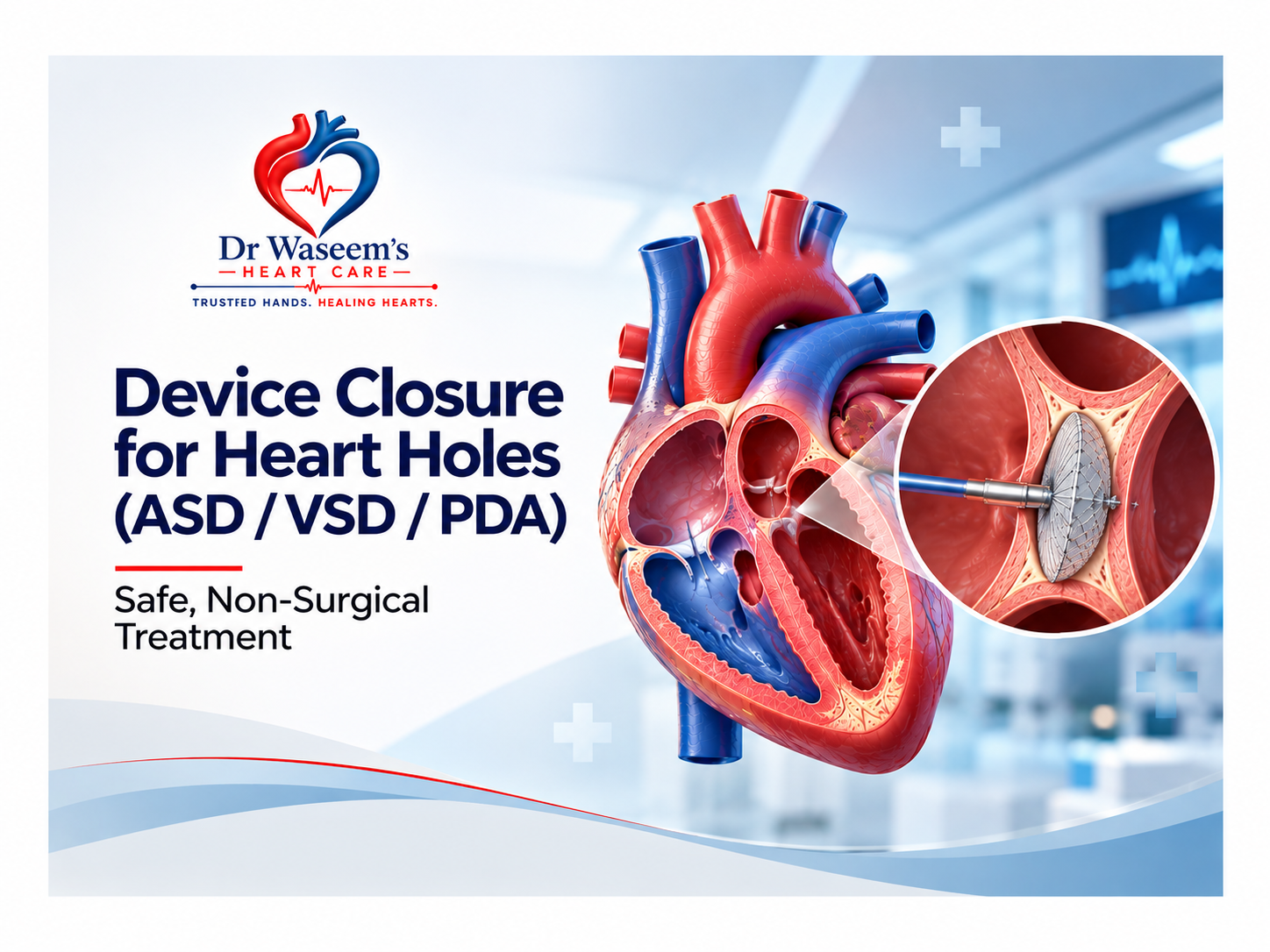
The procedure is performed in a high-tech Cardiac Catheterization Laboratory (Cath Lab) under mild sedation or general anesthesia, guided by live fluoroscopy (X-ray) and transesophageal echocardiography (TEE):
1. Vascular Access via the Groin
A tiny puncture is made in the femoral vein at the top of the leg. A thin, flexible delivery sheath (tube) is advanced through the venous system into the heart and carefully passed across the hole.
2. Deploying the Occluder Device
The specialized heart occluder device (often shaped like a miniature double-umbrella made of super-elastic Nitinol wire mesh filled with polyester fabric) is compressed inside the catheter. When positioned across the defect, the cardiologist opens the first disc on the left side, pulls it gently against the wall, and opens the second disc on the right side. This clamps the hole securely between the two discs.
3. Permanent Natural Integration (Endothelialization)
After confirming proper positioning with echocardiography, the device is released from the delivery cable and the catheter is withdrawn. Over the next 3 to 6 months, the body’s natural heart tissue (endothelium) grows completely over the device mesh, making it a permanent, natural part of your heart septum.
Is Device Closure Safe and What is the Recovery Time?
Patients and parents frequently ask: is ASD device closure safe?
Device closure is considered exceptionally safe, with clinical success rates exceeding 98% in experienced interventional hands. Because there is no surgical incision or rib spreading, the heart hole closure recovery time is remarkably fast:
- Day 1: Rest in the hospital room for observation and post-procedure echocardiogram.
- Day 2: Discharge home with mild blood-thinning medication (such as Aspirin for 6 months) to prevent clot formation while tissue grows over the device.
- Week 1: Return to school, desk work, and light daily activities.
- 1 Month Onward: Full clearance for sports, running, and active exercise.
FAQ: Frequently Asked Questions
Does the device need to be replaced as a child grows?
No. Once deployed, the device remains in place permanently. Heart tissue grows entirely over the mesh, and it does not need replacement or removal as the patient matures.
Can adults also undergo ASD or VSD device closure?
Yes! Many adults discover an ASD in their 20s, 30s, or 40s during a routine health check or after experiencing unexplained fatigue, palpitations, or breathlessness. Adult device closure provides immediate symptom relief and prevents long-term pulmonary hypertension.
Will I feel the device inside my chest?
No. You will not feel or hear the device. It has no moving parts, produces no sound, and does not set off airport metal detectors.
How do I know if my heart hole is suitable for device closure?
A specialized 2D Echocardiogram or Transesophageal Echocardiogram (TEE) is performed to measure the exact size of the hole and verify that sufficient surrounding tissue rims exist to anchor the device securely.
Consult Dr. Waseem Nadaf for Structural Heart Interventions in Bangalore
Early closure of congenital heart defects prevents permanent enlargement of the heart chambers, heart failure, and pulmonary arterial hypertension. Dr. Waseem Nadaf (DM Cardiology, DNB Cardiology) is a leading interventional cardiologist in Bangalore specializing in complex structural heart disease, non-surgical device closure, coronary interventions, and preventive cardiac care. Schedule a consultation at Parkside Medical Centre in HBR Layout, Bangalore, or call +91 91087 81238.