
Coronary Angiography Bangalore: Why It’s the Gold Standard for Diagnosing Heart Blockages
When a physician suspects arterial blockages after an abnormal treadmill test (TMT) or recurring chest discomfort, undergoing a coronary angiography Bangalore is the most definitive and accurate diagnostic investigation available. While non-invasive scans provide general estimates, a coronary angiogram gives interventional cardiologists a direct, high-definition visualization of blood flow through your coronary arteries in real time. For patients in Bengaluru seeking accurate cardiac answers, consulting an experienced heart specialist ensures precise diagnosis and complete peace of mind.
It is natural to feel anxious when advised to undergo cardiac catheterization. Much of this concern stems from confusing diagnostic testing with surgery. Understanding the key differences between angiography vs angioplasty, knowing what happens during the angiography test procedure, and discovering whether is angiography painful will help you feel confident and prepared for your appointment.
What Coronary Angiography Actually Shows in Real-Time
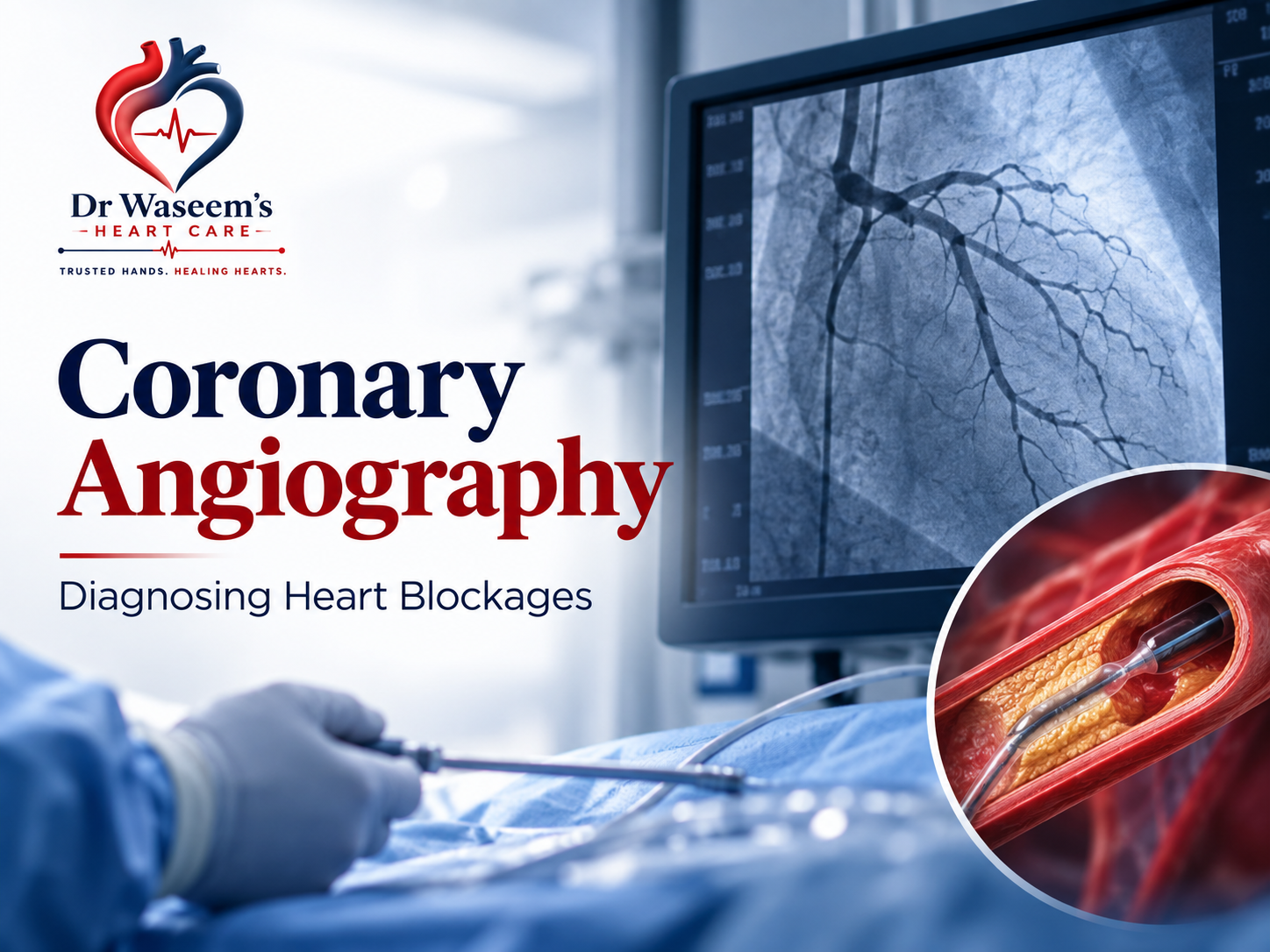
A coronary angiogram is a specialized X-ray examination of the blood vessels supplying oxygen to your heart muscle. During a coronary angiography Bangalore, a small amount of radio-opaque contrast dye is injected through a thin catheter directly into your coronary arteries. As the dye flows, live X-ray video imaging (fluoroscopy) captures the internal contours of the vessels.
This real-time visualization reveals:
- Exact Location of Blockages: Identifies precisely whether plaque is in the left main, left anterior descending (LAD), circumflex, or right coronary artery.
- Severity Percentage: Measures whether an artery is 30%, 70%, or 100% blocked.
- Collateral Blood Vessels: Determines whether natural bypass micro-vessels have formed to supply ischemic heart muscle.
- Blood Flow Dynamics: Provides instantaneous angiography test results to help plan further medical or interventional care.
Angiography vs Angioplasty: Understanding the Core Difference
A frequent point of confusion for patients is distinguishing between angiography vs angioplasty. While they are performed in the same cardiac catheterization laboratory, their clinical objectives are entirely distinct:
| Parameter | Coronary Angiography | Coronary Angioplasty |
|---|---|---|
| Purpose | Diagnostic test (maps and measures blockages). | Therapeutic treatment (opens blocked arteries). |
| Instruments | Diagnostic catheter & contrast dye. | Balloon catheter, guidewire & drug-eluting stent. |
| Duration | 15 to 30 minutes. | 45 to 90 minutes. |
| Hospital Stay | Day-care (discharge in 4–6 hours). | 1 to 2 days of monitoring. |
In summary: angiography diagnoses, while angioplasty treats. If a critical blockage is identified, your cardiologist may discuss proceeding directly to an angioplasty treatment in the same sitting to spare you a second catheterization.
Why It Remains the “Gold Standard” Over Non-Invasive Tests
Although non-invasive diagnostic tests such as CT coronary angiograms, 2D echocardiography, and treadmill stress tests (TMT) are useful screening tools, catheter-based coronary angiography Bangalore remains the undisputed gold standard for several clinical reasons:
- Direct Hemodynamic Measurement: Measures live pressure gradients and arterial flow velocity rather than relying on computed estimations.
- Unaffected by Heart Rate or Calcification: Severe arterial calcium or rapid heartbeats can distort CT scans, whereas fluoroscopy produces sharp, unmistakable imaging.
- Immediate Transition to Stenting: If an urgent blockage is found, the interventional setup is already in place to open the artery without delay.
The Step-by-Step Angiography Test Procedure
Knowing what occurs during each stage of the angiography test procedure helps eliminate anxiety before your appointment:
1. Pre-Procedure Preparation
Patients fast for 4 to 6 hours before the procedure. Baseline blood tests (especially Serum Creatinine to verify kidney health for contrast elimination) and an ECG are completed. You will receive a mild sedative to keep you calm and comfortable.
2. Local Anesthesia and Catheter Access
In the sterile Cath Lab, local anesthesia is injected to numb your wrist (transradial access) or groin (transfemoral access). Modern cardiology favors transradial (wrist) access because it allows for rapid recovery and minimal bleeding risk.
3. Contrast Injection and Live Recording
A thin catheter is guided through the blood vessels to the heart. Contrast dye is gently injected while multiple X-ray angles are recorded. You may experience a brief warm flushing sensation that passes within seconds.
4. Band Placement and Day-Care Recovery
The catheter is removed, and a compressive wrist band (TR band) is applied to ensure clean hemostasis. The entire diagnostic test is completed in roughly 15 to 25 minutes.
Is Angiography Painful? What You Actually Feel
One of the most frequent patient questions is: is angiography painful?
The reassuring reality is that coronary angiography is minimally uncomfortable rather than painful. Local anesthesia numbs the skin, so you will only feel a tiny pinch during the initial numbing injection. Blood vessels do not have internal pain nerve endings, meaning you will not feel the catheter advancing. Because you remain conscious, you can speak directly with Dr. Waseem throughout the test.
What Happens When a Blockage is Identified?
Your detailed angiography test results determine your treatment plan:
- Mild Narrowing (<50%): Managed effectively with lifestyle modifications, cholesterol-lowering medications (statins), and antiplatelet therapy.
- Significant Blockages (70%–90%): Usually treated by performing an angioplasty and stenting procedure to restore arterial blood flow.
- Complex Multi-Vessel Disease: In cases of diffuse blockages or left main disease, coronary artery bypass graft (CABG) surgery may be recommended for optimal long-term outcomes.
Angiography Cost in Bangalore and Recovery Expectations
The angiography cost Bangalore typically ranges between ₹12,000 and ₹25,000 for an elective day-care diagnostic procedure. The overall cost varies depending on the chosen hospital room category, pre-procedure labs, and whether access is radial or femoral.
Recovery is swift. With radial wrist access, the compression band is removed after 3 to 4 hours. Once your vital signs are stable, you will receive your report and return home on the same day, resuming non-strenuous activities within 24 to 48 hours.
FAQ: Frequently Asked Questions
What is the difference between angiography vs angioplasty?
Angiography is an exploratory diagnostic test that maps and measures blockages using X-rays and dye. Angioplasty is the therapeutic procedure that uses balloons and stents to clear those blockages.
Is coronary angiography safe?
Yes. Coronary angiography is an established, highly safe clinical procedure. Minor risks like wrist bruising are temporary, and serious complications are rare when performed in advanced Cath Labs.
How soon are angiography test results available?
The angiography test results are visible immediately in real time on the Cath Lab monitors. Your cardiologist will review the images with you right after the procedure.
Do I need to stay in the hospital overnight?
Most radial (wrist) angiograms are day-care procedures with discharge after 4 to 6 hours. Overnight admission is usually only required if you undergo an immediate angioplasty or if femoral (groin) access was used.
Consult Dr. Waseem Nadaf for Expert Cardiac Care in Bangalore
Early and accurate diagnosis is the most vital step in preserving your heart health. Dr. Waseem Nadaf is a senior interventional cardiologist in Bangalore specializing in transradial angiography, complex coronary angioplasty, and cardiac device implantations. For personalized consultations, visit Parkside Medical Centre in HBR Layout, Bangalore, or call +91 91087 81238.