
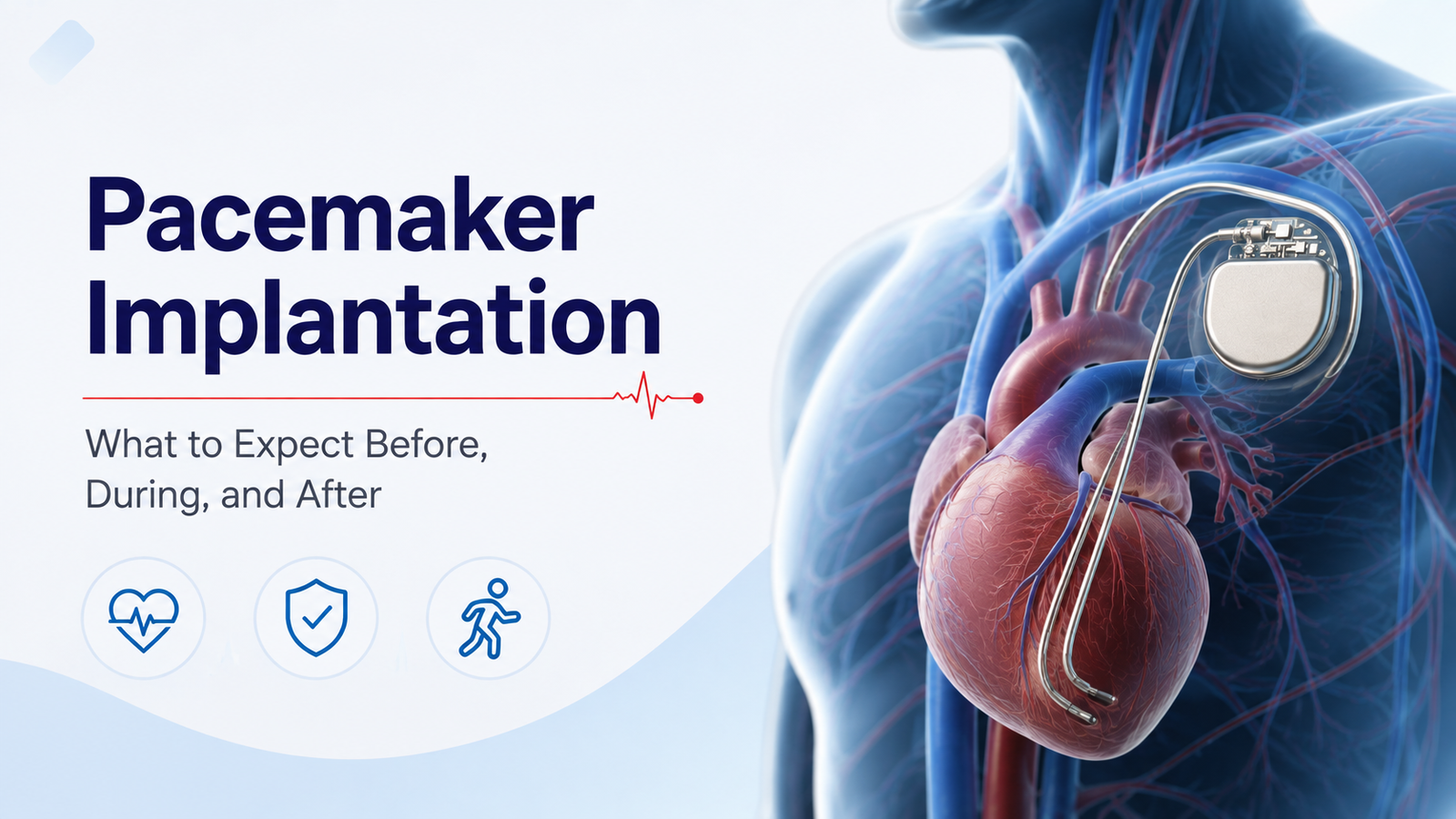
Medical Disclaimer: The information provided in this article is for educational and informational purposes only and is not a substitute for professional medical advice, diagnosis, or treatment. Always seek the advice of a qualified healthcare provider regarding any cardiac symptoms or concerns. If you believe you or someone else is experiencing a medical emergency, contact emergency medical services immediately.
The human heart relies on a sophisticated internal electrical grid to pump blood efficiently throughout the body. When this natural timing system falters, it can cause the heart to beat too slowly, too fast, or irregularly, leading to symptoms like chronic fatigue, fainting spells, or lightheadedness. For many patients facing these rhythmic challenges, undergoing a pacemaker implantation Bangalore is a highly effective, routine clinical intervention. This procedure involves placing a small electronic device beneath the skin to regulate the heart’s rhythm and restore healthy blood circulation. Choosing an experienced cardiologist to perform the procedure is key to achieving optimal results and preventing complications. By choosing a specialist in Bengaluru, patients can access world-class interventional support close to home.
It is natural to feel anxious when considering any cardiovascular procedure. However, modern medical advances have made the implantation process minimally invasive, quick, and safe. To help alleviate any anxiety, this comprehensive guide explains the entire journey—from pre-operative evaluations and clinical preparation to the step-by-step procedure, post-operative recovery, and adjustments to long-term living. Understanding what to expect during your pacemaker surgery recovery and the specific pacemaker procedure steps will help you feel confident as you take this step toward a healthier, more active life. Consulting a cardiac specialist is the first step toward getting the right support.
What a Pacemaker Does: The Heart’s Electrical System
To understand the clinical significance of a pacemaker, it helps to briefly examine how the heart’s natural pacemaker works. The heart contains a specialized group of cells called the sinoatrial (SA) node, located in the right atrium. The SA node acts as the heart’s natural spark plug, generating electrical impulses that travel through the cardiac tissue, causing the chambers to contract and pump blood. A disruption at any point along this electrical pathway can impair the heart’s rhythm, causing a slow heart rate (bradycardia) or erratic signals.
How the Artificial Pacemaker Steps In:
- Continuous Monitoring: The implantable generator monitors your heart’s natural electrical activity 24/7.
- On-Demand Electrical Pacing: If your heart rate drops below a pre-programmed threshold, the device delivers a low-energy electrical impulse.
- Rhythm Coordination: Leads carry these electrical impulses directly to the heart muscle, stimulating the chambers to contract in a coordinated fashion.
- Activity Adjustment: Modern rate-responsive pacemakers can detect body motion or breathing rates to automatically increase pacing during exercise.
By stepping in only when your heart’s natural timing grid falters, a pacemaker prevents the heart from beating too slowly, ensuring a consistent supply of oxygenated blood to your brain and body. Seeking consultation for pacemaker implantation Bangalore ensures you receive a device tailored to your specific rhythmic needs.
Who Typically Needs a Pacemaker?
Cardiologists recommend pacemakers for individuals diagnosed with specific conduction system disorders. While a thorough evaluation is required, some of the most common conditions that lead to implantation include:
- Symptomatic Bradycardia: A persistent, abnormally slow heart rate (typically below 60 beats per minute) that causes fatigue, dizziness, confusion, or shortness of breath.
- Heart Block: A condition where the electrical signals between the upper chambers (atria) and lower chambers (ventricles) are delayed or completely blocked, often caused by aging, scarring, or certain medications.
- Sick Sinus Syndrome: A malfunction of the SA node where it fails to generate signals properly, resulting in alternating periods of slow and fast heartbeats.
- Advanced Heart Failure: Some patients are candidates for specialized devices that coordinate the pumping of both ventricles. This therapy, known as cardiac resynchronization therapy (CRT), helps improve the heart’s pumping efficiency.
If you experience fainting spells, unexpected fatigue, or shortness of breath, a cardiac screening is essential. A cardiologist will perform diagnostics to check if your symptoms are rhythm-related and determine if you are a candidate for a pacemaker.
Before the Procedure: Pre-operative Tests and Fasting
Proper preparation is key to a smooth and safe implantation. In the days leading up to the procedure, your cardiac care team will coordinate several pre-operative steps to assess your overall health and prepare your body:
Required Pre-operative Screening:
- Electrocardiogram (ECG): To record your heart’s electrical patterns and document the baseline rhythm disorder.
- Echocardiogram: An ultrasound of the heart to evaluate your cardiac chambers, valves, and pumping capacity.
- Blood Panels: Complete blood counts, kidney function tests, and coagulation profiles to ensure your blood clots normally.
- Chest X-ray: To evaluate the size and structure of your heart and lungs prior to placing the device leads.
Fasting and Medication Instructions:
- Fasting Guidelines: You must fast (no food or liquids, including water) for at least 6 to 8 hours before the procedure, as directed by your clinical team.
- Medication Adjustments: You must inform your cardiologist of all medications you take. Your doctor may instruct you to temporarily stop blood thinners, antiplatelets, or certain diabetes medications a few days prior to the procedure.
- Hygiene Protocol: Patients are often asked to shower using a special antibacterial soap (such as chlorhexidine) the night before or the morning of the procedure to minimize infection risks.
During your pre-op consultation, do not hesitate to ask questions about the procedure, the technology being used, and the overall pacemaker cost Bangalore. Having an open dialogue with your cardiologist helps ease any pre-procedure anxiety.
During the Procedure: Step-by-Step Overview
A pacemaker implantation is performed in a specialized cardiac catheterization lab or an electrophysiology suite. The procedure is minimally invasive and is typically performed under local anesthesia and conscious sedation rather than general anesthesia. This means you will remain awake but relaxed and comfortable throughout the process.
The Key Pacemaker Procedure Steps:
- Step 1: Preparation & Local Anesthesia: The skin below your collarbone (usually on the non-dominant side) is shaved, sanitized, and numbed using a local anesthetic injection. An IV line is started to deliver sedatives and antibiotics.
- Step 2: Accessing the Vein: The cardiologist makes a small incision (about 2 to 3 inches long) in the numbed area. Through this incision, the doctor accesses a major vein (usually the subclavian vein) that leads directly to the heart.
- Step 3: Inserting and Positioning the Leads: Using real-time X-ray imaging (fluoroscopy) for guidance, the cardiologist inserts thin, insulated wires (leads) through the vein and into the specific chambers of the heart. Depending on the device type, one, two, or three leads are placed.
- Step 4: Testing the Leads: Once the leads are positioned, the clinical team runs electrical tests to verify that the wires are in optimal contact with the heart tissue, have low electrical thresholds, and can transmit signals successfully.
- Step 5: Creating the Pocket and Connecting the Generator: The cardiologist creates a small pocket beneath the skin and muscle layer just below your collarbone. The leads are connected to the pulse generator, and the generator is placed into the pocket.
- Step 6: Closing the Incision: The incision is closed using absorbable sutures, surgical glue, or steri-strips, and covered with a sterile, protective dressing.
The entire procedure typically takes 1 to 2 hours to complete. Because it does not involve open-chest surgery, it is much less invasive and carries a significantly shorter recovery time than patients often expect.
Immediately After the Procedure: Recovery Room and Hospital Stay
Once the device is secure and the incision is closed, you will be transferred to a post-operative recovery room. The clinical staff will closely monitor your vital signs, heart rhythm, and incision site as the sedation wears off. A post-operative chest X-ray is performed to verify the exact position of the leads and ensure your lungs are fully expanded.
Most patients are kept in the hospital overnight for observation. During this short stay, the clinical team will verify that the pacemaker is pacing and sensing correctly. You will receive mild pain relievers to manage any soreness or pressure at the incision site. Before discharge, your cardiologist will provide detailed instructions on wound care, arm movement restrictions, and emergency contact details.
The First 4 to 6 Weeks: Activity Restrictions and Wound Care
The initial recovery phase is critical because it takes time for the pacemaker leads to secure themselves within the heart tissue and for the pocket to heal. Managing your pacemaker surgery recovery properly during the first 4 to 6 weeks prevents lead displacement and wound infection.
Wound Care Guidelines:
- Keep it Dry: Keep the incision site dry for the first 5 to 7 days. You should sponge-bathe rather than shower to keep the dressing dry.
- Watch for Infection: Check the incision daily for signs of infection, such as increased redness, swelling, warmth, bleeding, or any discharge. Inform your doctor immediately if you notice these signs or experience a fever.
- Avoid Lotions or Creams: Do not apply any ointments, powders, or lotions to the healing incision unless explicitly prescribed by your doctor.
Movement and Activity Restrictions:
- Limit Arm Movement: Avoid raising the arm on the pacemaker side above shoulder level (e.g., reaching for high shelves or brushing hair with that hand) for 4 to 6 weeks. This prevents the leads from pulling out of position.
- Avoid Heavy Lifting: Do not lift, push, or pull anything heavier than 5 kg (such as grocery bags or suitcases) using the arm on the pacemaker side.
- Avoid Strenuous Activities: Refrain from vigorous exercises, heavy cleaning, golf, tennis, or swimming until your cardiologist clears you. Walking is highly recommended to promote circulation.
While recovery timelines vary, most patients can return to normal, light daily activities within a few days, provided they adhere to these arm restrictions. Always consult your cardiologist for personalized recovery milestones.
Living with a Pacemaker: Long-Term Care
Once you are fully recovered, living with a pacemaker becomes a seamless part of your daily routine. Most patients experience a significant improvement in their energy levels, breathing, and overall quality of life. Long-term management involves keeping up with a few routine precautions:
- Routine Device Checkups: You will need to visit your cardiologist every 3 to 6 months to evaluate the device. During these checks, the doctor uses a programmer to read the battery level, check lead integrity, and adjust pacing settings. Many modern devices support remote monitoring from home.
- Electromagnetic Interference (EMI): Modern pacemakers are well-shielded against everyday appliances. However, keep cell phones at least 6 inches away from your device (use the opposite ear). Avoid strong magnetic fields, high-voltage industrial machinery, and arc welders.
- MRI Safety: If you require an MRI scan, inform the technician that you have a pacemaker. Many modern devices are MRI-conditional, meaning they can undergo scans safely under specific programmed settings, but this must be verified by your cardiologist.
- Battery Longevity: Pacemaker batteries generally last between 7 and 12 years. Replacing the battery is a quick, minor outpatient procedure where the doctor opens the pocket, replaces the generator, and connects it to the existing leads.
Carrying your pacemaker identification card at all times is highly recommended. This card contains essential information about your device model, lead details, and contact numbers, which is vital in emergencies.
About Dr. Waseem Nadaf: Interventional Cardiology Specialist
Dr. Waseem Nadaf is a senior interventional cardiologist in Bangalore with the highest clinical qualifications (DM Cardiology, DNB Cardiology, MD General Medicine, MBBS). He specializes in coronary interventions, cardiac pacing, and advanced device implantations, including single-chamber, dual-chamber pacemakers, and cardiac resynchronization therapy (CRT).
Dr. Waseem Nadaf offers diagnostic evaluations and outpatient consultations at Parkside Medical Centre in HBR Layout, Bangalore. He also provides clinical care at Sri Jayadeva Institute of Cardiovascular Sciences, Shifaa Hospital, and Altius Hospital. His patients receive comprehensive care, from initial cardiac assessments to post-procedure monitoring and battery checks.
FAQ: Frequently Asked Questions
Is pacemaker surgery painful?
Most patients wonder: is pacemaker surgery painful? Because local anesthesia is used to completely numb the incision site, you will not feel sharp pain during the procedure. You may feel some mild pressure as the leads are placed and the generator pocket is created. After the procedure, some soreness, tightness, and bruising around the incision site are normal and can be managed with basic pain relievers.
How long does the pacemaker battery last?
A pacemaker battery generally lasts between 7 and 12 years. The exact lifespan depends on how frequently the device is active and the energy settings required to pace your heart. Your cardiologist will monitor the battery level during routine checks and schedule a minor generator replacement procedure well before the battery runs low.
Can I still exercise with a pacemaker?
Yes! In fact, most patients find they have more energy for physical activity once their heart rate is regulated. You must avoid strenuous exercise and heavy lifting during your initial pacemaker surgery recovery (the first 4 to 6 weeks). Once the leads are secure and your cardiologist clears you, you can safely return to light jogging, walking, cycling, and other hobbies.
Will I set off airport metal detectors?
While a pacemaker contains metal parts that could trigger a metal detector, the scanning machines will not damage or reprogram your device. Simply show your pacemaker identification card to security personnel, request a manual pat-down, and avoid standing or lingering inside the walk-through security scanners.
What is the typical pacemaker cost in Bangalore?
The overall pacemaker cost Bangalore varies based on the type of device required (single chamber, dual chamber, or a specialized CRT device), the brand, and the hospital facility where the procedure is performed. You should discuss the specific device type, hospital charges, and insurance coverage with your cardiologist to get an accurate estimate.
Conclusion: Take Action for Your Cardiovascular Health
A pacemaker is a remarkable medical advancement that helps restore a normal heart rhythm, letting you return to a full and active life. Adhering to the recommended pacemaker surgery recovery guidelines and following your cardiologist’s advice ensures a safe and successful outcome. If you are experiencing symptoms of a slow heart rate or have questions about the procedure, booking a consultation with a specialist is the best way to get personalized advice.
For expert cardiovascular care, diagnostic screenings, and device evaluations in HBR Layout, you can consult the best cardiologist in Bangalore. Schedule your appointment at Parkside Medical Centre to receive specialized, compassionate support. Call +91 91087 81238 to take control of your heart health today.